A door that suddenly sticks, a frame that sounds hollow when you knock, or fine powder near the hinge: these are often the first clues of termites in door frames. In Islamabad, where many houses sit on moist soil near the Margalla foothills, deemak quietly eats wooden chaukhats from the inside for months before anyone notices. This guide explains the warning signs, why frames are a favourite target, and how professional termite control in Islamabad stops the damage before you have to replace the woodwork.
Why Termites Target Door and Window Frames
Door and window frames are fixed into walls and floors that touch the soil. Termites climb up through hidden gaps and reach the wood without ever coming into the light.
Subterranean termites live in the soil under your house. They need moisture and cellulose, and a wooden chaukhat gives them both. The bottom of a door frame sits close to the floor, often near the soil, and window frames are fixed into walls that hold damp after rain. Termites travel through cracks in the foundation, gaps around the frame and behind plaster, then eat the wood from the inside out.
Islamabad has its own risk factors. Sectors like I-8, I-9, I-10, G-9 and G-10 have many older houses with original deodar or sheesham frames. Heavy monsoon rain and winter dampness keep the soil moist, and new construction nearby disturbs termite colonies, pushing them toward existing homes. That is why termites in house woodwork are so common across the city.
Early Signs of Termites in Door Frames
Hollow sound on knocking, paint that bubbles, doors that stop closing smoothly and thin mud lines on the nearby concrete wall are early warnings. Catching them early saves the frame.
Look for these signs around every door and window:
- Hollow or papery sound when you knock on the frame
- Paint bubbling or cracking on the wood surface, while the wood behind it is eaten away
- Doors and windows sticking or becoming hard to close as the frame weakens
- Thin, earth-coloured mud lines on the concrete wall or floor right next to the frame
- Small holes or fine dust near hinges and the bottom of the chaukhat
- Winged termites or their shed wings near window sills, especially after rain
Remember, termites do not build mud tubes on the wood itself. The wood looks fine from outside but is hollow inside. The mud lines appear on the concrete wall, floor or plaster nearby, where termites need a covered path to reach the frame.
Why Market Sprays Don’t Fix Termite Damage
Termites live deep in the soil and inside the wood. A surface spray kills only the few you can see, while the colony keeps feeding inside the frame and under the floor.
Many families try a bottle of spray from the market when they first see damage. It may kill the termites on the surface, but the colony under the house can hold thousands more. They simply move a few inches and keep eating. Some people also repaint or fill the damaged spot, which hides the problem while the frame gets weaker.
Proper deemak ka ilaj treats three things together: the wood that is already attacked, the hidden paths in walls and floors, and the soil barrier that stops new termites from entering. Without all three, termites usually come back within months.
How Eco Defend Treats Termites in Frames
Eco Defend inspects every frame, injects termiticide into the attacked wood, sprays the wooden surfaces and treats the floor along walls to build a protective barrier around the house.
Our deemak treatment follows a clear process:
- Full inspection: The technician checks all door frames, window frames, built-in cupboards and kitchen woodwork to find every active spot.
- Wood injection: Small holes are made in the attacked frame with a micro drill, and termiticide is injected directly into the tunnels inside the wood.
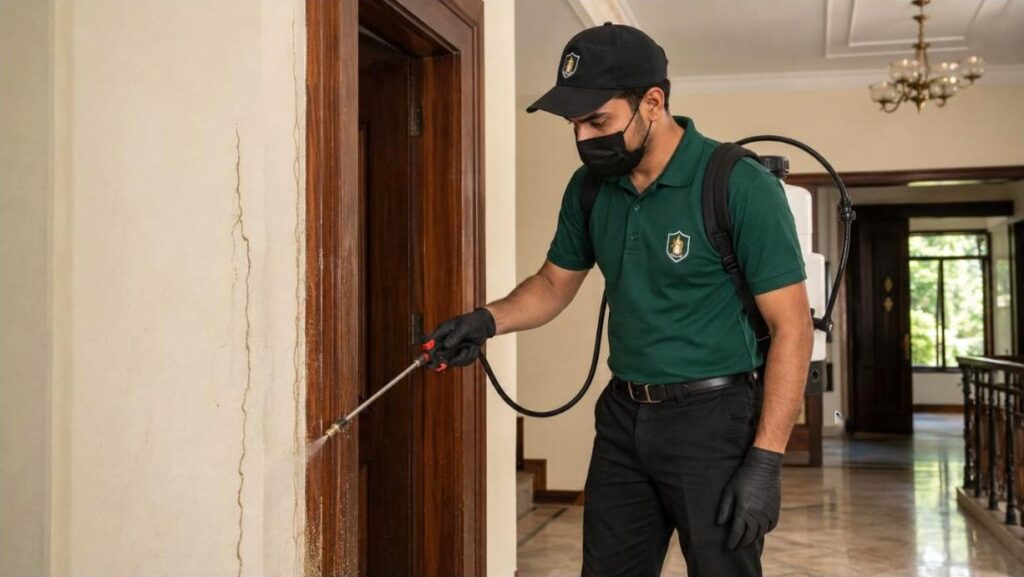
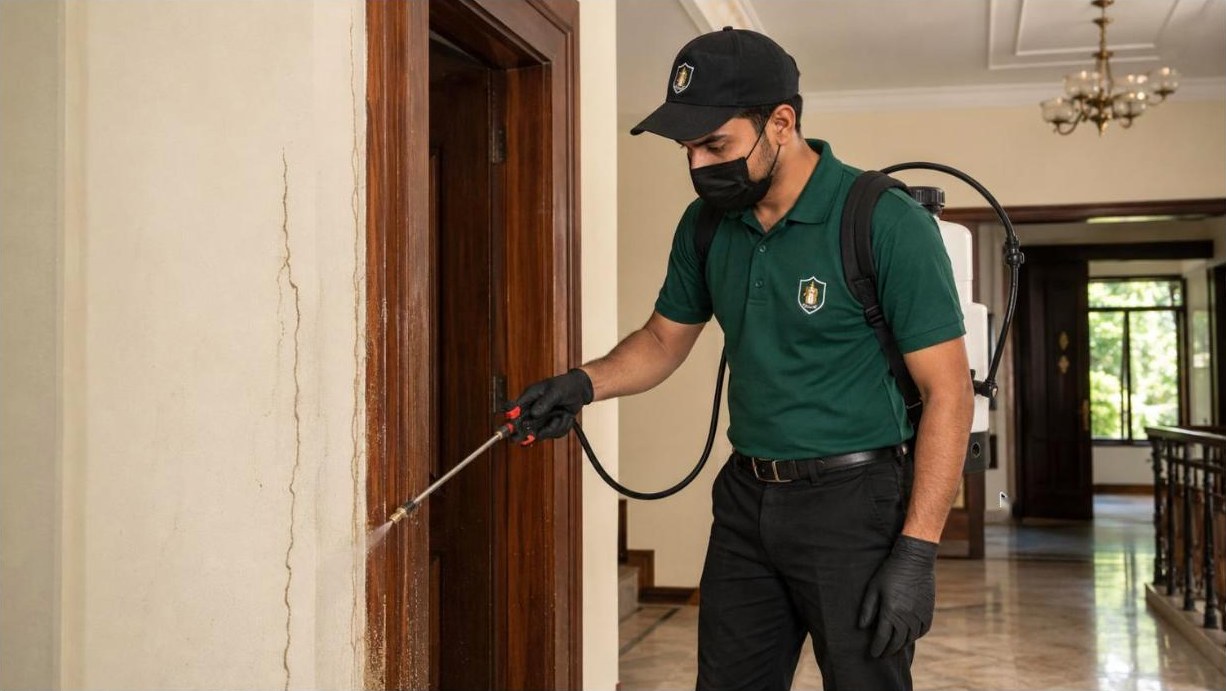
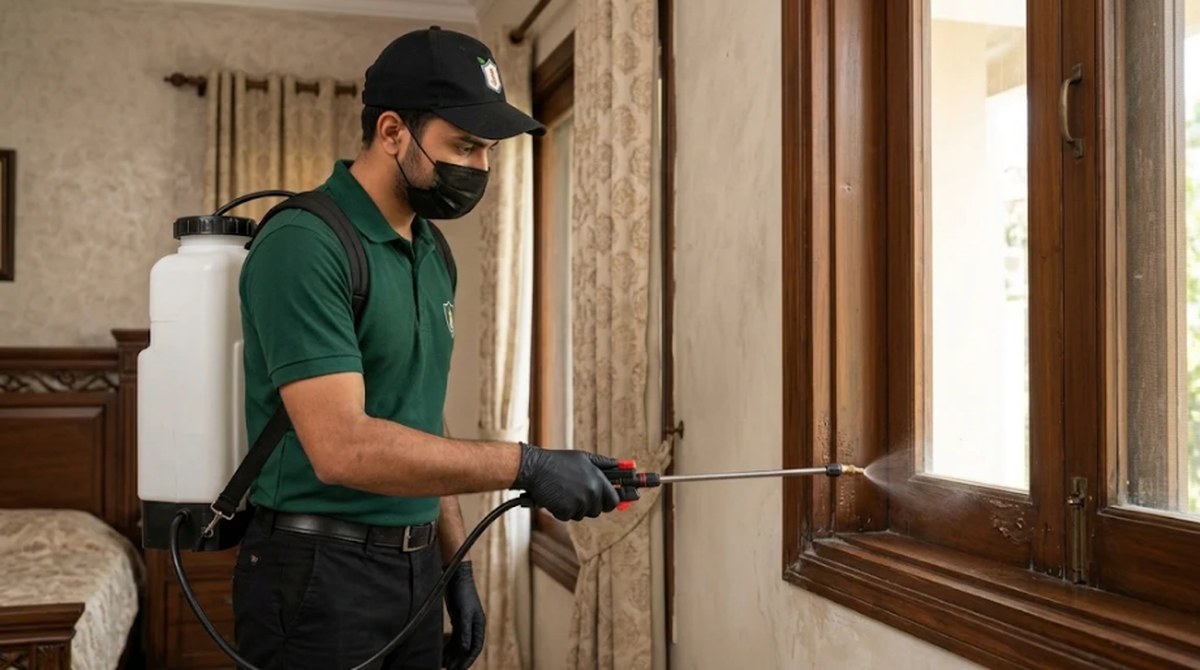
- Wood spray: The frame surfaces, hinges and joints are sprayed so termites in and around the wood are treated.
- Floor barrier: Holes are drilled into the floor only along the walls near affected rooms, termiticide is injected into the soil below, and the holes are filled neatly flush with tile-matched grout.
- Advice and follow-up: The team explains what to watch for and schedules a follow-up check if needed.
This combination reaches the colony, not just the visible damage, which is what makes professional termite control last.
Termite Fumigation vs Targeted Treatment
For door and window frames, targeted injection and spray work best. Wider termite fumigation is used when the infestation has spread across many rooms or the whole structure.
Families often ask whether they need full termite fumigation. For damage limited to a few frames and cupboards, targeted injection, wood spray and a floor barrier along the affected walls are enough and cause less disruption. If termites are active in many rooms, roof wood and ceilings, a whole-house termite treatment with a complete barrier is the better choice. Eco Defend recommends the right option only after inspecting your home.
| Situation | Recommended approach |
|---|---|
| 1-3 frames affected | Wood injection + wood spray + local floor barrier |
| Many frames and cupboards | Full-house barrier + wood treatment |
| New construction | Pre-construction soil treatment |
Protecting Your Frames After Treatment
Keep wood dry, fix leaking pipes near frames, avoid storing wood or cartons against walls and schedule yearly inspections. These steps keep termites away from your treated chaukhats.
After termite control services are complete, a few habits help protect your home:
- Fix leaking pipes and seepage near door and window frames
- Keep firewood, old furniture and cartons away from walls
- Do not block the treated floor area with new tiles or concrete without telling us
- Repaint or repair damaged frames only after treatment is complete
- Book a yearly termite inspection, especially before the monsoon and swarming season
If a frame is badly hollow, it may need repair or replacement after treatment. Our team will tell you honestly whether the wood can be saved.
Frequently Asked Questions
1. How do I know if there are termites in door frames?
Knock on the frame. A hollow sound, bubbling paint, sticking doors and thin mud lines on the nearby wall are the most common signs of termites in door frames.
2. Can a termite-damaged door frame be saved?
If treated early, most frames can be saved. Badly hollow frames may need repair after the termites are eliminated.
3. What is the best deemak ka ilaj for window frames?
Wood injection, surface spray and a floor barrier along the wall together give the best result. Market sprays alone rarely stop the colony.
4. How long does deemak treatment take in an Islamabad house?
Most homes are treated in a few hours to one day, depending on the number of rooms and frames affected.
5. Is termite treatment safe for children and pets?
Yes, when done by trained technicians. Keep children and pets away from treated areas for a few hours, as advised by the team.
6. Do you provide termite control in Islamabad sectors and Rawalpindi?
Yes. Eco Defend provides termite control in Islamabad sectors including I-8, I-9, I-10, G-9, G-10, G-13 and H-13, as well as Rawalpindi.
Book Termite Control in Islamabad Today
Seen hollow frames, mud lines or winged termites at home? Don’t wait for the damage to spread. Eco Defend’s trained team inspects and treats termites in door and window frames across Islamabad. Read more about our termite control services in Islamabad.
Call: 0300 8560316 | WhatsApp: Chat with us | Or fill in the contact form to book an inspection.